Have you started avoiding certain foods because chewing feels difficult? Do your dentures slip when you speak or laugh, or are you worried about undergoing implant surgery after 60? These concerns are common, and choosing replacement teeth can feel overwhelming when you are unsure what will work for your health and lifestyle.
At Dr. Ashwadhi’s Dental Clinic in Thane, treatment planning begins with understanding your concerns and oral health. With over 15+ years of dental experience, Dr. Ashwadhi combines personalised guidance with modern digital diagnostic technology to help patients explore suitable tooth replacement options.
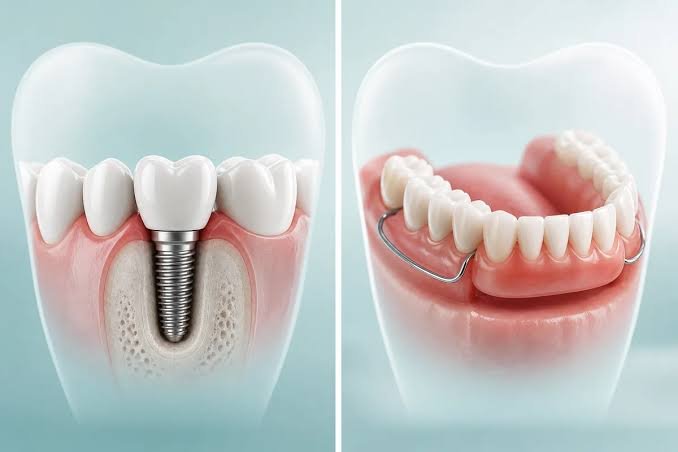
Both options replace missing teeth, but they work differently.Dentures are removable artificial teeth that can be taken out for cleaning, while dental implants are placed in the jawbone to support replacement teeth. Depending on the type of restoration, implants can support fixed replacement teeth that stay in place during everyday activities. The choice often comes down to whether you prefer a removable solution or a fixed option, alongside your oral health and treatment needs.
What matters | Dentures | Dental implants |
How they work | Removable artificial teeth that rest on the gums | Small posts placed in the jawbone to support replacement teeth |
Removability | Can be removed for daily cleaning | Can support fixed replacement teeth that stay in place |
Eating and speaking | May require an adjustment period | Provide stable support once healing is complete |
Treatment | No implant surgery required | Requires surgery and healing time |
Cleaning | Removed for daily cleaning | Cleaned in the mouth, like natural teeth, with additional care around the implant |
Initial Cost | Generally lower | Generally higher |
Long-term care | May need adjustments or replacement | Requires regular dental check-ups and ongoing maintenance |
The right choice depends on your oral health, daily needs, comfort and personal preference. Some people prefer the convenience of a removable option, while others prefer fixed replacement teeth. Your dentist can help you understand the suitable options, including their treatment requirements and costs, so you can make an informed decision.
Dental implants can replace one tooth, several teeth or support a full arch of replacement teeth. Being over 60 does not automatically rule out treatment. For people who prefer fixed replacement teeth, implants may be an option, provided their oral health and overall medical condition support treatment. The choice also depends on the type of restoration being considered and the patient’s expectations.
Your gum health, available jawbone, medical history and medications all matter. Conditions such as diabetes or osteoporosis may influence planning but do not automatically make implants unsuitable.
At Dr. Ashwadhi’s clinic, CBCT imaging can help assess your jawbone and plan implant placement when clinically needed. If you are considering this option, learn more about dental implant treatment in Thane and how a personalised assessment can help determine the right approach for your needs.
Dentures can be a suitable option if you prefer removable replacement teeth that you can take out for cleaning. They may also suit people who do not wish to undergo implant surgery. Partial dentures replace some missing teeth, while complete dentures replace all teeth in the upper or lower arch.
New dentures may take time to feel familiar. If their fit changes, you may need adjustments or relining. Regular dental reviews help your dentist assess their fit and comfort as your mouth changes.
If you are considering dentures, explore denture treatment options at Dr. Ashwadhi’s Dental Clinic to understand which solution may suit your needs.
The right treatment is the one that meets your needs safely and comfortably, not necessarily the most advanced or expensive option. Your choice may depend on whether you prefer removable dentures or fixed replacement teeth, along with your oral health, jawbone condition, medical history and expectations. Dr. Ashwadhi can help you compare suitable options so you can decide what feels right for you.
Main concern | Dr Ashwadhi Advice |
Preferring a removable option | I would discuss conventional dentures and explain how they can be removed for cleaning, so you can decide whether this approach suits your daily routine |
Preferring fixed replacement teeth | I would assess your gum health and jawbone condition to determine whether dental implants could support a suitable fixed restoration. |
Improving the stability of existing dentures | I would first check the fit of your existing dentures. Depending on your needs, we could discuss adjustments or assess whether an implant – supported option may be suitable. |
Replacing most or all teeth | I would evaluate your oral health, jawbone support, and expectations before recommending suitable options which may include complete dentures, implant-supported dentures or fixed implant restoration. |
Choosing based on comfort and daily routine | I would explain how removable dentures and implant- supported options differ in use, cleaning and maintenance, then help you compare them against your preferences. |
Although the procedures differ, both begin with understanding your dental needs.
The timeline depends on your oral health and the treatment selected.
Yes. People over 60 can receive dental implants if their oral and general health support treatment. A dentist assesses the jawbone, gums, medical history and medications before recommending implants.
Neither is universally better. Dentures are removable and can be taken out for cleaning, while dental implants can support fixed replacement teeth, depending on the restoration chosen. Some people prefer a removable solution, while others prefer a fixed option. The right choice depends on your oral health, comfort, preferences and the options your dentist considers suitable.
Yes. Some denture wearers may be suitable for implant-supported dentures or fixed replacement teeth. A dental examination and assessment of the jawbone will help determine the available options.
The cost of dentures or dental implants depends on the type of treatment, number of teeth being replaced and any additional procedures required. Cost is one factor to consider alongside whether you prefer removable or fixed replacement teeth, your oral health and the treatment requirements. Ask your dentist for a personalized estimate.
Yes. Implants need brushing, cleaning between teeth and regular dental check-ups. Removable dentures also require daily cleaning and appropriate overnight care as advised by your dentist.
Missing teeth should not stop you from enjoying meals or smiling with confidence. Whether you are considering dentures or dental implants after 60, a personalised assessment can help you understand which options suit your oral health and lifestyle.
At Dr. Ashwadhi’s Dental Clinic in Thane, a consultation helps you compare suitable denture and dental implant options, understand the expected costs and make an informed decision without feeling pressured. Book a consultation with Dr. Ashwadhi to discuss your concerns, explore the right treatment for your needs and take the first step towards eating, speaking and smiling with greater confidence.

Transform your smile with confidence. Dr. Ashwadhi Sunil, with 15+ years of expertise, delivers state of the art dental care, ensuring you receive the latest advancements and personalized treatment for your perfect smile.
© 2024 Ashwadhi’s All Rights Reserved.