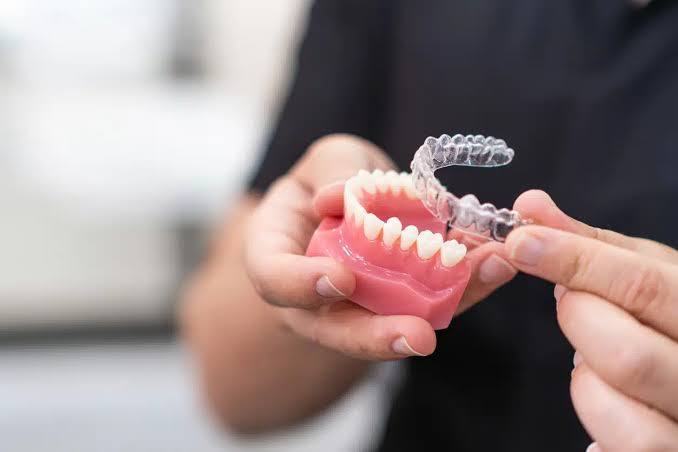
That’s where Invisalign has changed the way many people think about orthodontic treatment. With nearly invisible clear aligners for teeth, it offers a discreet and comfortable alternative to traditional braces for many patients.
But is Invisalign the right treatment for your smile? In this guide, you’ll learn what Invisalign is, how it compares with braces, what it’s really like to wear, and whether it could be the right choice for you. You’ll also find practical insights from Dr. Ashwadhi, along with common myths about Invisalign and the facts behind them.
Invisalign uses a series of custom-made clear aligners to gradually move your teeth into better alignment without the need for metal brackets or wires.
Unlike traditional braces, Invisalign aligners are transparent, removable, and designed to fit comfortably over your teeth. They offer a discreet way to straighten your teeth without the appearance of metal brackets and wires.
Quick Fact: Every Invisalign treatment begins with a digital smile scan, allowing your dentist to create a personalised treatment plan and preview your expected smile transformation.
One of the first questions patients ask is, “Will it hurt?” The good news is that Invisalign aligners don’t usually cause pain. You may feel mild pressure for a day or two when changing to a new aligner. This simply means your teeth are moving as planned.
Choosing between Invisalign and braces can feel confusing, but the right treatment depends on your smile, not what’s most popular.
Feature | Invisalign Aligners | Traditional Braces |
Appearance | Nearly invisible | Visible metal brackets and wires |
Best suited for | Many mild to moderate cases and selected complex cases | Mild to complex orthodontic cases |
Removable | Yes | No |
Oral hygiene | Easier to maintain | Requires extra care around brackets |
Comfort | Smooth, customised aligners | May cause irritation initially |
Food restrictions | Remove aligners before meals and enjoy your usual diet | Certain hard and sticky foods should be avoided |
Patient commitment | Requires wearing aligners for 20–22 hours daily | Fixed to the teeth |
If you’ve been researching Invisalign, you’ve probably come across a lot of advice online. While some of it is helpful, there are also a few common myths that can make choosing the right treatment confusing.
Let’s separate fact from fiction.
Fact: Invisalign isn’t just for adults. It can also be suitable for teenagers, and Invisalign First is designed for selected children who may benefit from early orthodontic treatment.
Fact: Invisalign can successfully treat many cases of crowding, spacing, and certain bite concerns. The most suitable treatment depends on your individual dental condition, not whether it’s braces or aligners.
Fact: Most patients experience only mild pressure for a day or two when changing to a new set of aligners. This is temporary and usually settles quickly.
Fact: Invisalign does more than create a straighter smile. It can also improve tooth alignment and help correct certain bite issues, contributing to better long-term oral health.
Invisalign can treat a wide range of orthodontic concerns, but suitability varies from person to person. The best way to know is through a professional dental assessment, where your teeth, bite, and smile goals are carefully evaluated.
Invisalign may be a suitable option if you have:
One of the biggest advantages of clear aligners for teeth is that Invisalign can be suitable for different age groups when recommended by a dentist.
Did You Know?
Because Invisalign First aligners are removable, children can brush and floss more easily than they can with fixed braces. Because the aligners are removable, children can brush and floss more effectively, helping reduce plaque build-up and lowering the risk of cavities compared with fixed braces when good oral hygiene is maintained.
The success of Invisalign depends not only on the aligners but also on the dentist planning and monitoring your treatment.
An experienced Invisalign dentist in Thane will take the time to understand your smile, carefully plan every stage of your treatment, and monitor your progress to help patients achieve healthy, confident smiles.
Choosing to straighten your teeth is a personal decision, and the right treatment begins with understanding your options. For many patients, Invisalign offers a comfortable, discreet, and effective way to achieve a healthier, more confident smile.
If you’re considering treatment, a consultation with an experienced Invisalign dentist in Thane can help you make an informed decision. With over 15+ years of experience in aligner therapy and recognition as a Gold Invisalign Provider, Dr. Ashwadhi combines careful treatment planning with regular follow-up care to help patients achieve the best possible results for their smile.
Many patients say they wish they had started sooner. The first step is simply understanding your options. A personalised consultation can help you decide whether Invisalign is the right choice for your smile.
Most patients experience mild pressure when they switch to a new set of aligners. This usually lasts for a day or two and is a normal sign that your teeth are gradually moving into position.
For the best results, Invisalign aligners should be worn for 20–22 hours a day. They should only be removed while eating, drinking anything other than water, and brushing or flossing.
Wearing your aligners for fewer than 20–22 hours a day can delay treatment and affect your results. If you’ve forgotten to wear them for a short period, speak to your dentist about the best next step.
Treatment time varies depending on the complexity of your case and how consistently you wear your aligners. Many patients complete Invisalign treatment within 6 to 18 months, although some cases may take longer. After assessing your teeth and bite, your dentist will provide a personalised treatment timeline.
Look for a dentist with experience in aligner therapy, personalised treatment planning, digital smile planning, and regular follow-up care. Choosing the right dentist is just as important as choosing the right treatment.
Yes, teeth can gradually shift over time if retainers aren’t worn as advised after treatment. To help maintain your new smile, your dentist will recommend wearing retainers once your Invisalign treatment is complete. Following these instructions is an important part of keeping your teeth in their new position for the long term.

Transform your smile with confidence. Dr. Ashwadhi Sunil, with 15+ years of expertise, delivers state of the art dental care, ensuring you receive the latest advancements and personalized treatment for your perfect smile.
© 2024 Ashwadhi’s All Rights Reserved.